July 26, 2026
The Home Insurance Documents You Don't Look at Until You Need Them

A pipe bursts under the bathroom sink at midnight. Water's into the hallway before you find the shutoff valve. The claims line asks for three things before anything else moves: the policy number, the declarations page, and proof of what the room looked like before this happened.
Most people have none of that ready. The policy is a PDF from a renewal email eleven months ago, if it was saved at all.
What a claim actually asks for
The declarations page, usually just called the dec page, is the one-page summary of the whole policy: what's covered, the deductible, the coverage limits, the renewal date. It's the document an adjuster wants first, and it's rarely the document people can find first.
After that: the policy number, the agent's contact information, and proof the damaged or stolen items existed before the claim. A home inventory decides a contents claim more than anything else does. Insurers don't take your word for what was in the closet. They want a photo, a receipt, a serial number.
The document nobody thinks to make
A home inventory sounds like a weekend project nobody has time for. It doesn't need to be one. A phone walking through each room, opening closets and cabinets, takes fifteen minutes and covers almost everything that would matter in a total loss. Do it once, update it after anything expensive comes into the house.
Riders and endorsements are the other blind spot. Scheduled jewelry, a home business, a flood or earthquake add-on: these live as separate documents from the main policy, and people forget they exist until a claim gets denied for something the standard policy never covered in the first place.
Where it usually lives, and why that's not enough
The insurer's own app is fine until you switch carriers, and it never held the inventory photos to begin with. An email folder works until three renewal cycles have buried the version you actually need under two years of unopened notices. A filing cabinet is fine at home and useless from a hotel room after a fire, which is exactly when you need it.
Renewal is the one day a year this actually gets checked
The renewal notice arrives, gets skimmed for the new premium, and gets filed. It's also the only document that says whether your dwelling coverage still matches what the house is actually worth, after the kitchen remodel or two years of rising replacement costs. Skipping that read is how people find out they were underinsured at the exact moment they needed not to be.
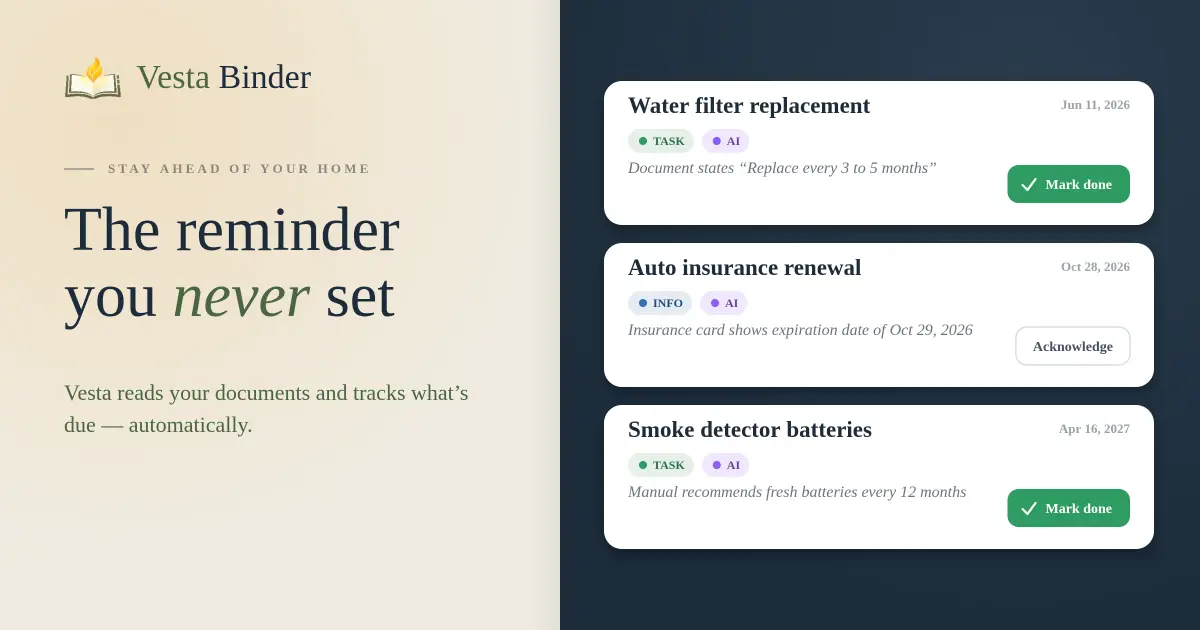
Vesta Binder reads the renewal date off the policy when you upload it and reminds you before it passes, the same way it does for warranty and registration dates. The dec page, the inventory photos, and the policy itself live in one place, so "when does the insurance renew" or "what's the deductible" gets answered in seconds instead of a search through old email.
Next time the pipe bursts at midnight, the call to the insurance company goes differently. The policy number, the dec page, and the photos are already on your phone, pulled up before the plumber even gets there.
Keep every home document in one place.
Vesta Binder stores your warranties, manuals, and records. Ask any question, get a cited answer in seconds.
Try free for 14 days